Cohere says Alibaba’s Qwen model tried to send a file to Beijing
Technologyvia TechCrunch
Quick Read
An AI model said it wouldn’t use any tools, then tried to send something to a server in Beijing anyway, and while researchers say it’s probably a training quirk and not espionage, the whole thing has people asking how much to trust free Chinese AI.
An AI model said it wouldn’t use any tools, then tried to send something to a server in Beijing anyway, and while researchers say it’s probably a training quirk and not espionage, the whole thing has people asking how much to trust free Chinese AI.
On Monday, Microsoft said it will offer voluntary buyouts to eligible employees in select parts of the company. CNBC reports that the buyouts will be offered to roughly 60,000 employees, or about a quarter of its global workforce. The company describes the offer as an opportunity for employees who may have already been considering career moves outside Microsoft. While Microsoft did not give a direct reason for the buyout package, it comes as the company has spent the last several years managing costs amid investment in AI infrastructure and data-center buildout. Microsoft will extend the voluntary exit offer (VEO) to qualifying employees in the United States, India, Canada, and the United Kingdom. Microsoft employees at level 70 or below will be eligible for the buyout program. The company's employee rankings are internal, but according to the salary and career database Levels.fyi, levels 65–67 correspond to principal positions, and 68–70 are at the partner/distinguished level. According to Chief People Officer Amy Coleman, eligible organizations were selected "based on each business’s priorities, customer commitments and workforce needs." The effort is the second time Microsoft has run a voluntary workforce reduction in 2026. In April, the company offered its first voluntary retirement package to 8,750 US employees. In July, the Xbox division laid off 3,200 employees, or about 20 percent of its entire gaming division. As reported by CNBC, about 30 percent of eligible employees accepted the retirement offer, lessening the impact of the planned layoffs, according to Coleman. While the offer in April went out to long-tenured employees who might be nearing the end of their career, the VEO expands the effort to a much larger potential pool.Read full article Comments
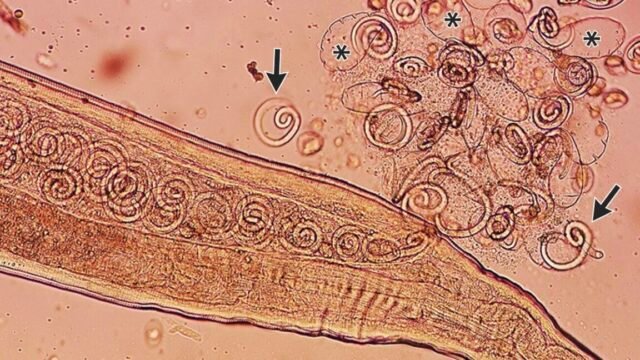
After two months of discomfort, a man in South Korea went to an eye clinic where doctors pulled 11 living, wriggling worms from his eyes. They apparently made the most of their time on the man's peepers; at the time of extraction, many of the female worms were pregnant. The man narrowly avoided having them spew their loads of living larvae directly into his eyes. The man in this case was a 71-year-old crop farmer. He told doctors that for the previous two months he had the sensation of having something stuck in both his eyes, which were also red and blurry. When ophthalmologists took a look, they quickly saw the problem: multiple mobile, whitish roundworms. His eyes were not in good shape either, as one might expect. The blood vessels in the membrane over the eye, the conjunctiva, were enlarged, making his eyes look red. And the cells of his cornea—the transparent, dome-shaped outer layer of the eye—had eroded, potentially after the helminths' hanky-panky. According to a case report published in the New England Journal of Medicine, the doctors gave the man a topical treatment to numb his eyes and then began plucking out the worms one by one with fine forceps. They collected 11 adult worms, which ranged in size from 11 to 22 mm.Read full article Comments
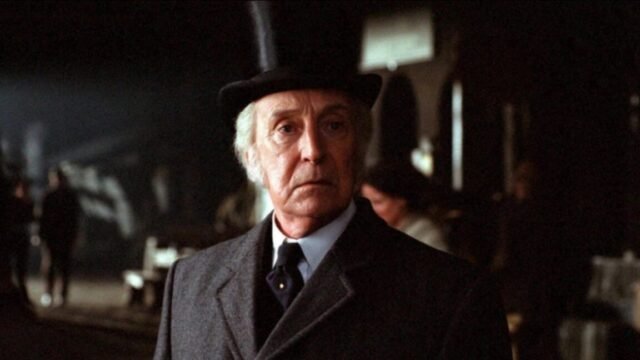
Sir Arthur Conan Doyle created one of the most beloved fictional detectives of all time in Sherlock Holmes, spawning countless novels, films, TV series, and so forth featuring the sleuth. Far fewer people know about the real-life inspiration for Holmes: a renowned surgeon at Scotland's University of Edinburgh named Joseph Bell, who taught Doyle when the author was still a young medical student. Bell is the subject of a new, eminently readable biography, Sleuth-Hound: The Case of the Real Sherlock Holmes, by medical historian Lindsey Fitzharris. A noted science communicator with a fondness for the medically macabre, Fitzharris published a biography of Scottish surgical pioneer Joseph Lister, The Butchering Art, in 2017—a great, if occasionally grisly, read. She followed up with 2022’s The Facemaker: A Visionary Surgeon’s Battle to Mend the Disfigured Soldiers of World War I, about a WWI surgeon named Harold Gillies who rebuilt the faces of injured soldiers. In 2020, Fitzharris hosted a documentary for the Smithsonian Channel, The Curious Life and Death Of…, exploring famous deaths, ranging from drug lord Pablo Escobar to magician Harry Houdini. Fitzharris performed virtual autopsies, experimented with blood samples, interviewed witnesses, and conducted real-time demonstrations in hopes of gleaning fresh insights. And last year she and her husband, caricaturist Adrian Teal, collaborated on an illustrated children's book, Dead Ends! Flukes, Flops, and Failures that Sparked Medical Marvels.Read full article Comments