SOUTH AFRICA: Transnet Rail Infrastructure Manager is undertaking a R8.9bn modernisation programme running to 2030 on the Sishen – Saldanha heavy haul railway, which carries export commodities including iron ore and manganese. The programme aims to improve infrastructure reliability and capacity on the 861 km line, which opened in 1976 to connect mines near Sishen with a port at Saldanha Bay. The investment comes as South Africa seeks to increase rail freight volumes and open its state-owned network to private train operating companies, with the government having set a target of rail carrying 250 mtpa of rail freight by 2029. This corridor alone carried 52.8 million tonnes of iron ore in the 2025–26 financial year, up from 50.6 mtpa the previous year. Its current licensed capacity is 60 mpta and operator Transnet is seeking approval to increase this to 67 mtpa. TRIM plans to invest approximately R2.2 bn in the corridor during the current financial year, including R1.5bn funded from the government’s Budget Facility for Infrastructure which has allocated R3.4bn for the programme. Transnet National Ports Authority is undertaking a separate R750m electrical upgrade at the port of Saldanha to provide power for Transnet Port Terminals to operate a third tippler to support higher throughput. Rolling stock maintenance is being funded separately. Transnet has allocated R1.47bn for the maintenance of locomotives and wagons this year, and a similar sum for next year. The programme includes the overhaul of Class 15E electric locos and Class 43 diesel locos. Transport Minister Barbara Creecy outlined the plans for the corridor during a visit to the line at Upington on October 12. This coincided with the annual maintenance shutdown, when work is undertaken which would be difficult while the trains are running. The shutdown was held from October 6 to 16 this year, enabling rail and sleeper replacement, ballast screening, turnout renewals, formation rehabilitation, culvert installation and electrical and signalling maintenance. The ministry said the shutdown created about 1 300 fixed-term jobs, with a further 600 indirect employment opportunities.
SOUTH AFRICA: Transnet Rail Infrastructure Manager is undertaking a R8.9bn modernisation programme running to 2030 on the Sishen – Saldanha heavy haul railway, which carries export commodities including iron ore and manganese.
The programme aims to improve infrastructure reliability and capacity on the 861 km line, which opened in 1976 to connect mines near Sishen with a port at Saldanha Bay. The investment comes as South Africa seeks to increase rail freight volumes and open its state-owned network to private train operating companies, with the government having set a target of rail carrying 250 mtpa of rail freight by 2029.
This corridor alone carried 52.8 million tonnes of iron ore in the 2025–26 financial year, up from 50.6 mtpa the previous year. Its current licensed capacity is 60 mpta and operator Transnet is seeking approval to increase this to 67 mtpa.
TRIM plans to invest approximately R2.2 bn in the corridor during the current financial year, including R1.5bn funded from the government’s Budget Facility for Infrastructure which has allocated R3.4bn for the programme.
Transnet National Ports Authority is undertaking a separate R750m electrical upgrade at the port of Saldanha to provide power for Transnet Port Terminals to operate a third tippler to support higher throughput.
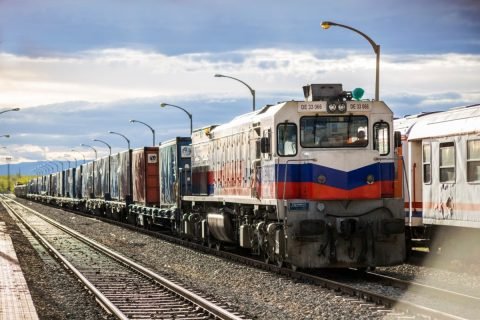
Rolling stock maintenance is being funded separately. Transnet has allocated R1.47bn for the maintenance of locomotives and wagons this year, and a similar sum for next year. The programme includes the overhaul of Class 15E electric locos and Class 43 diesel locos.
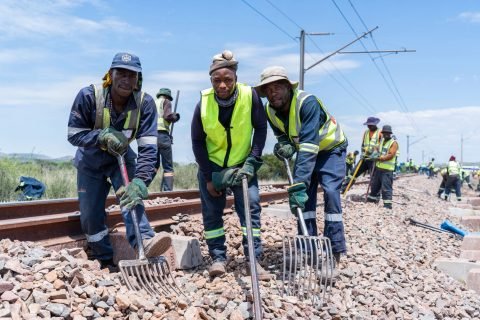
Transport Minister Barbara Creecy outlined the plans for the corridor during a visit to the line at Upington on October 12. This coincided with the annual maintenance shutdown, when work is undertaken which would be difficult while the trains are running. The shutdown was held from October 6 to 16 this year, enabling rail and sleeper replacement, ballast screening, turnout renewals, formation rehabilitation, culvert installation and electrical and signalling maintenance.
The ministry said the shutdown created about 1 300 fixed-term jobs, with a further 600 indirect employment opportunities.
Source: Railway Gazette