UK EV sales hit a new all-time record in September. The country registered 99,199 battery-electric cars last month, up 36.3% from a year ago and good for 28.3% of the market, according to preliminary data released today by the Society of Motor Manufacturers and Traders (SMMT). Tesla’s Model 3 was the best-selling EV and the second best-selling car overall. And yet the auto industry’s own lobby group is using the record month to argue that the UK’s EV targets are too hard. more…
UK EV sales hit a new all-time record in September. The country registered 99,199 battery-electric cars last month, up 36.3% from a year ago and good for 28.3% of the market, according to preliminary data released today by the Society of Motor Manufacturers and Traders (SMMT).
Tesla’s Model 3 was the best-selling EV and the second best-selling car overall. And yet the auto industry’s own lobby group is using the record month to argue that the UK’s EV targets are too hard.
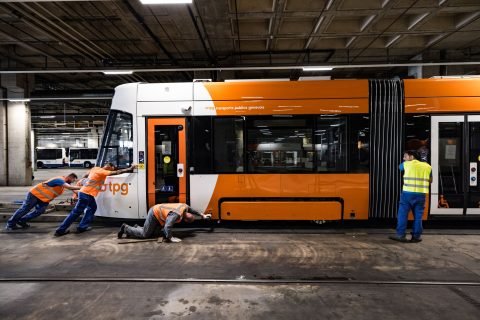
This week’s round-up of news from the global urban rail transport sector. In September Genève transport operator TPG took delivery of the first of 38 Stadler Tramlink cars ordered in December 2022 to support network expansion and replace older vehicles. Entry into service is planned for 2027, with the trams able to operate on all five routes. The 44 m long bidirectional vehicles have an onboard traction battery, 74 seats, a total capacity of 252 passengers, 14 doors and four spaces for wheelchair users. The municipality of Hwaseong, a satellite town south of Seoul, announced on October 9 that it expects to start construction of a 31.6 km two-line tramway network later this month. The local authority had previously reported good progress on contract negotiations, underway since April, with local construction and engineering company DL E&C, which was sole bidder for final design and civil works. On October 8, CAF delivered the first nine-module Urbos3 tram to Budapest ordered in 2022-23 under a 2014 framework agreement. The five nine-module trams will enter service on Line 1 to accompany 17 more ordered under earlier options. In September Philadelphia‘s SEPTA took delivery of 24 single-deck Comet coaches purchased from Montréal‘s Exo for US$8·58m using US$220m of emergency funding allocated by Pennsylvania Governor Josh Shapiro in November 2025 to support urgent safety upgrades and infrastructure improvements. They will be overhauled to work with SEPTA’s push-pull locomotives, joining 10 coaches leased from Maryland’s MARC in December. South Korean manufacturer Sung Shin Rolling Stock Technology has been in advanced negotiations for the supply of an unspecified number of six-car battery-electric multiple units for the Lagos Red Line suburban railway, the supplier told Railway Gazette International at InnoTrans 2026 in Berlin. Test running has started on an 8.3 km section of the former 1 000 mm gauge railway being rebuilt to form part of the Arapiraca suburban rail project in the Brazilian state of Alagoas. The line will use the reconstructed railway alignment for 9 km while another 4 km will be newly built. Test running is being undertaken using a diesel loco and a passenger car; this formation is heavier than the two-car Prosper City diesel multiple-units being supplied for the line by Marcopolo Rail. Atlanta’s MARTA has integrated its standalone See & Say app for reporting safety concerns, suspicious activity and maintenance issues into the main MARTA app. ‘Consolidating our reporting tools into one MARTA app makes it faster and more convenient for passengers to connect with safety personnel, while also managing their daily commute, all in one place. It’s all part of our effort to improve the overall customer experience for MARTA riders’, said General Manager & CEO Jonathan Hunt. Sacramento RTD opened an infill station on its Green Line north of the city centre on October 15. The new stop at 7th & Railyards serves a redevelopment zone.
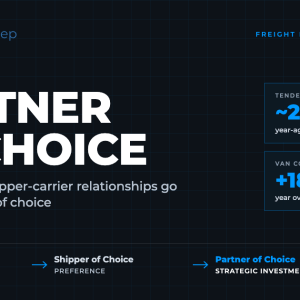
With tender rejections running about 2.5 times last year and contract rates reset roughly 18% higher, SONAR’s latest sitrep explains what shippers should expect a higher-priced carrier relationship to deliver. Partner of choice is a shipper-carrier relationship in which both sides invest in each other’s networks, not just transact on loads. Shipper of choice earns preference for the freight. Partner of choice earns investment in the relationship: drivers, equipment, surge capacity, network ideas and pricing flexibility. That distinction is the focus of SONAR’s new sitrep, Partner of Choice. It builds on SONAR’s June 2026 Shipper of Choice report and arrives as carriers decide which customers justify long-term commitments ahead of the 2027 bid season. window.googletag = window.googletag || {cmd: []}; googletag.cmd.push(function() { var gptSlot = googletag.defineSlot('/21776187881/FW-Responsive-Main_Content-Slot1', [[300, 100], [320, 50], [728, 90], [468, 60]], 'div-gpt-ad-1709668545404-0').defineSizeMapping(gptSizeMaps.banner1).addService(googletag.pubads()); googletag.pubads().enableSingleRequest(); googletag.pubads().collapseEmptyDivs(); googletag.enableServices(); setInterval(function() { if (!document.hidden) { googletag.pubads().refresh([gptSlot]); } }, 60000); }); googletag.cmd.push(function() { googletag.display('div-gpt-ad-1709668545404-0'); }); Key takeaways Shipper of choice is still the foundation. Efficient facilities, short dwell, predictable tenders and fair payment remain the price of entry. No carrier invests in a customer whose dock consumes driver hours. Partner of choice is a strategic decision, not an operational one. Shipper of choice is decided load by load on the dispatch board. Partner of choice is decided in carrier planning meetings where drivers, trailers and dedicated fleets are allocated. Five attributes define a partner: transparency, commitment, network fit, mutual problem solving and shared value. Network fit is an underused lever. Shippers with outbound freight in inbound-heavy markets hold structural value to carriers, and can trade it for priority on harder lanes. Partnership runs both ways. Carriers that ask for long-term commitments owe shippers capacity, early warnings, market insight and fair pricing across the cycle. Why it matters now: the market data The 2026 truckload market is being shaped by capacity rather than a demand surge, according to SONAR data. VCRPM1 values are as of September 30 of each year, the latest published reading. Tightness is not evenly spread. Reefer rejections averaged 21.47% and flatbed 19.01% in the week of Oct. 6–12, versus 11.05% for van. Origin markets such as Quincy, Illinois (48.38%) and Cedar Rapids, Iowa (38.46%) are far tighter than inbound-heavy markets like Lakeland, Florida (3.25%) and Phoenix (3.55%). The progression: transactional to partner of choice The sitrep frames partnership as a maturity curve: Transactional (execution): “What is the rate on this lane?” Carriers accept freight when convenient and price for churn. Shipper of choice (preference): “Do we want to haul this freight?” Carriers protect the freight in tight markets. Partner of choice (strategic investment): “Do we want to build our network around this customer?” Carriers commit assets, bring ideas unprompted and flag issues early. The decisive shift, the report argues, is when the carrier stops simply servicing the shipper’s network and starts helping shape it. What’s inside the full sitrep A six-pillar bridge from the June Shipper of Choice framework to partner-of-choice capabilities Why partnership pushes in 2018 and 2020–2022 faded, and what may be different this cycle Lane-level network-fit examples using SONAR’s Headhaul Index (HAUL), Lane Score and contract rates Where partnerships break down, with early warning signs and corrective actions A six-question, 1–5 self-assessment shippers can score with their carriers Five practical actions to take before the 2027 bid season The window, the report concludes, is now. Contract repricing is largely done, but partner-of-choice positions are still being set. Subscribe to SONAR to read the full Partner of Choice sitrep or access all sitreps via FreightWaves Market Monitor. window.googletag = window.googletag || {cmd: []}; googletag.cmd.push(function() { var gptSlot = googletag.defineSlot('/21776187881/fw-responsive-main_content-slot3', [[728, 90], [468, 60], [320, 50], [300, 100]], 'div-gpt-ad-1665767553440-0').defineSizeMapping(gptSizeMaps.banner1).addService(googletag.pubads()); googletag.pubads().enableSingleRequest(); googletag.pubads().collapseEmptyDivs(); googletag.enableServices(); setInterval(function() { if (!document.hidden) { googletag.pubads().refresh([gptSlot]); } }, 60000); }); googletag.cmd.push(function() { googletag.display('div-gpt-ad-1665767553440-0'); }); Frequently asked questions What is a partner of choice in freight? A partner of choice is a shipper whose carriers invest in the relationship, committing drivers, equipment, surge capacity, network ideas and pricing flexibility. It goes beyond shipper of choice, which only earns preference for the freight. What is the difference between shipper of choice and partner of choice? Shipper of choice is an operational question decided load by load: do we want to haul this freight? Partner of choice is a strategic question decided in carrier planning: do we want to build our network around this customer? What are the five attributes of a partner-of-choice relationship? SONAR’s sitrep identifies five: transparency, commitment, network fit, mutual problem solving and shared value. Why does partner of choice matter in 2026? Tender rejections (STRI) averaged 13.78% in the week of Oct. 6–12, 2026, about 2.5 times the 5.48% a year earlier, and van contract rates (VCRPM1) are up 18.2% year over year. Carriers are deciding which customers justify long-term investment ahead of the 2027 bid season. window.googletag = window.googletag || {cmd: []}; googletag.cmd.push(function() { var gptSlot = googletag.defineSlot('/21776187881/fw-responsive-main_content-slot4', [[300, 100], [320, 50], [728, 90], [468, 60]], 'div-gpt-ad-1709668086344-0').defineSizeMapping(gptSizeMaps.banner1).addService(googletag.pubads()); googletag.pubads().enableSingleRequest(); googletag.pubads().collapseEmptyDivs(); googletag.enableServices(); setInterval(function() { if (!document.hidden) { googletag.pubads().refresh([gptSlot]); } }, 60000); }); googletag.cmd.push(function() { googletag.display('div-gpt-ad-1709668086344-0'); }); How can shippers use network fit to win carrier priority? Shippers with outbound freight in inbound-heavy markets, such as Lakeland, Florida or Phoenix, help carriers reposition trucks. They can commit consistent volume on those easier lanes in exchange for priority on harder ones. The post Partner of Choice: Why the Best Shipper-Carrier Relationships Now Go Beyond Shipper of Choice appeared first on FreightWaves.
#fwtv_ejLr0Y8sEnY .fwtv-panel{border:1px solid #d0d0d0;padding:18px;border-radius:6px;line-height:1.6}#fwtv_ejLr0Y8sEnY .fwtv-panel p{margin:0 0 12px}#fwtv_ejLr0Y8sEnY .fwtv-note{font-style:italic;color:#666;margin-top:16px;padding-top:12px;border-top:1px solid #e0e0e0}The freight market is seeing fluctuating volumes and steady tender rejections, with a particular spotlight on the refrigerated sector. Learn why 1 in 5 reefer loads are being rejected nationally, and how rising diesel costs and fall harvests are impacting spot and contract rates. Discover which regions are driving these trends and what to expect as winter approaches.Refrigerated truckload tender rejections are running at 21.44% nationally as of Oct. 20, meaning roughly 1 in 5 reefer loads is being turned down by carriers, according to FreightWaves SONAR data. That figure has held near the 21% range after peaking at 22.13% on Sept. 17 and briefly dipping to a low of 20.89% on Sept. 24 — signaling persistently tight capacity in the temperature-controlled segment even as broader freight demand softens.The overall truckload market has been similarly resilient on the capacity side. The SONAR Truckload Rejection Index (STRI) has hovered between 13% and 14% since August, sitting at 13.9% as of Oct. 20, while the SONAR Truckload Volume Index (STVI) slipped about 2% week over week to approximately 11,000 on the index — a sign of muted demand that has yet to translate into meaningful rate relief for shippers.Geography is a key factor behind the elevated reefer rejection numbers. SONAR’s tender rejection maps show the tightest conditions concentrated in the Pacific Northwest and across parts of the Midwest, regions where refrigerated volumes have also climbed. Julie Van de Kamp attributed the pressure to fall harvest commodities — apples, potatoes, and onions moving out of the Pacific Northwest, and poultry and other protein products shipping from South Dakota, Iowa, and nearby states ahead of Thanksgiving demand.“I think that’s primarily being driven by harvest for fall — think apples, potatoes, onions in the PNW, things being harvested and stored there, as well as protein meat products in the Midwest like poultry, early Thanksgiving, getting ready for that and those sorts of refrigerated commodities shipping out of there,” said Julie Van de Kamp.On rates, the reefer segment has outpaced the broader market in 2024. Refrigerated spot rates are up approximately 28% year-to-date, while reefer contract rates have risen about 9% year-to-date, according to SONAR data Van de Kamp cited. She noted that diesel costs make the economics of refrigerated freight especially sensitive, since reefer units must keep trailers running continuously — a cost burden that doesn’t ease when the trailer is empty or parked.Van de Kamp also flagged the coming winter as a factor that could sustain or push rates higher. Reefer equipment is not only used to keep cargo cold in warm months but also to protect temperature-sensitive freight from freezing once ambient temperatures drop below 32 degrees — demand that extends well into the first quarter. “I expect to see refrigerated rates continue to rise even more than van rates,” she said.A bright spot for shippers has been Southern California, where tender rejections remain below the national average but have been tightening — a pattern that Van de Kamp said typically precedes peak-season freight activity. Overall, she summed up the Oct. 20 market snapshot this way: freight volumes slipped, but carriers have maintained the leverage to be selective about what loads they accept, keeping rejection rates firm across modes.Reefer tender rejections hit 21.44% nationally on Oct. 20, near a year-to-date high of 22.13% reached on Sept. 17.Refrigerated spot rates are up 28% year-to-date while contract rates have risen 9%, with diesel costs adding extra pressure on the temperature-controlled sector.Fall harvest volumes in the Pacific Northwest and Midwest protein shipments are the primary drivers of tight reefer capacity, with winter freeze-protection demand expected to sustain pressure.This Summary is generated thanks to a transcription of the interview, for the full interview please enjoy the video above. The post Reefer Truckload Rejections Soar: 1 in 5 Loads Rejected Nationally appeared first on FreightWaves.