TechCrunch Disrupt 2026 starts tomorrow: Your final chance to secure up to $100 ticket savings
Technologyvia TechCrunch
Quick Read
Tomorrow at 8 a.m. PT, it all begins. 10,000+ founders, investors, and tech operators will gather at San Francisco’s Moscone West for TechCrunch Disrupt 2026 for three days of ideas, connections, and startups shaping what comes next. This is your last 24 hours to secure ticket savings of up to $100, and get 50% off a second.
Tomorrow at 8 a.m. PT, it all begins. 10,000+ founders, investors, and tech operators will gather at San Francisco’s Moscone West for TechCrunch Disrupt 2026 for three days of ideas, connections, and startups shaping what comes next. This is your last 24 hours to secure ticket savings of up to $100, and get 50% off a second.
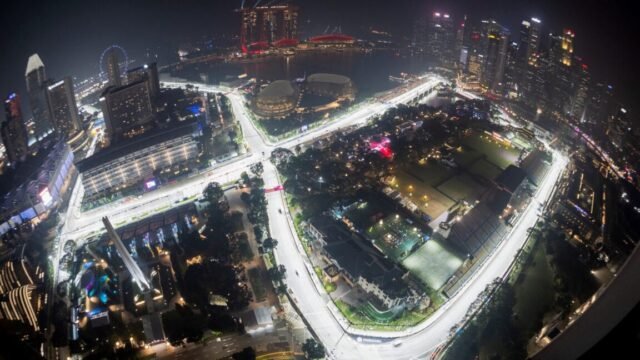
Formula 1’s lengthy 2026 season is entering its final stretch. The sport took to the floodlit streets of Singapore on Sunday night, but Saturday saw action, too; this Grand Prix weekend was also the final of six sprints this year. The night race might be one of modern F1’s greatest spectacles. From overhead shots, the track becomes a bright, illuminated ribbon among the looming darkness of the city-state’s overpasses and skyscrapers. At ground level, the cars shower glittering sparks from their titanium skid blocks as the drivers flirt with how close they can get to the walls. As tracks go, the 90-degree turns and concrete barrier-lined streets were a world away from the abrasive tarmac and ample runoff of Malaysia last time out. But the tropical heat and humidity were a constant given both locations’ proximity to the equator. Showers for the sprint In Malaysia (which was still technically the Bahrain GP), a pre-race downpour disrupted things mightily. On Saturday morning in Singapore, shortly before the start of the sprint, it seemed history was about to rhyme when the skies opened. With standing water in places on the track, the sprint was delayed by 30 minutes. The sprint format, where a short extra race replaces a practice session a day before the main event, is unloved by the drivers and teams. For one thing there’s little prestige in winning Saturday’s sprint. And with qualifying just a few hours later, risk-taking is discouraged lest one wreck the car and ruin Sunday’s race a day early. Oh no, not again! Credit: Mark Thompson/Getty Images And in Singapore, like most street circuits, the proximity of the unyielding barriers that line the track mean there are real, punishing consequences for getting it even a little wrong.Read full article Comments
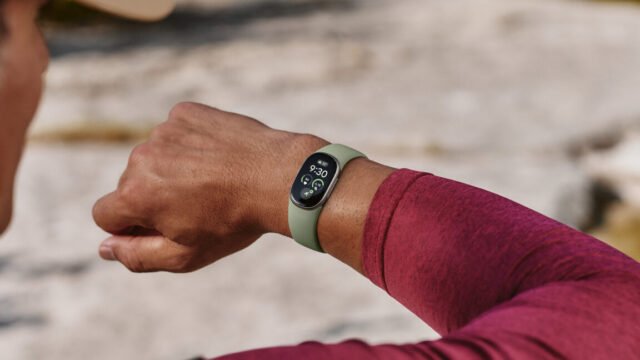
Google is releasing its second Fitbit tracker of 2026, offering fans of the aging Charge 6 a more refined option. The new Fitbit Edge slots right in between the Pixel Watch 5 and the Fitbit Air, featuring a compact screen and more health sensors than the Air. You won't get all the apps and features of the Pixel Watch 5, but the Edge is only about half as expensive. The Fitbit Edge is essentially a new Charge 6, but it has more of a Pixel Watch aesthetic. Squish Google's smartwatch from the sides, and you've got the Edge. It has a pill-shaped 1.34-inch OLED touch display inside a slender aluminum frame that is rated IP68 (5 ATM) for water and dust protection. Google says the screen has 46 percent more viewable area compared to the Charge 6. It's very close in overall size to the Fitbit Air and uses the same magnetic charging puck. Left to right: Fitbit Air (with new metal mesh bend), Fitbit Edge, and Pixel Watch 5. Credit: Google The Edge works with Android or iPhones via the Google Health app, and it can run for about seven days on a charge. If the tracker is away from your phone, it can still follow your activity all week with support for seven days of full health data storage (or 30 days of basic data). However, the generous week-long battery life does not include always-on display mode. If you choose to turn that on, the battery life drops to about two days, barely longer than the Pixel Watch 5.Read full article Comments
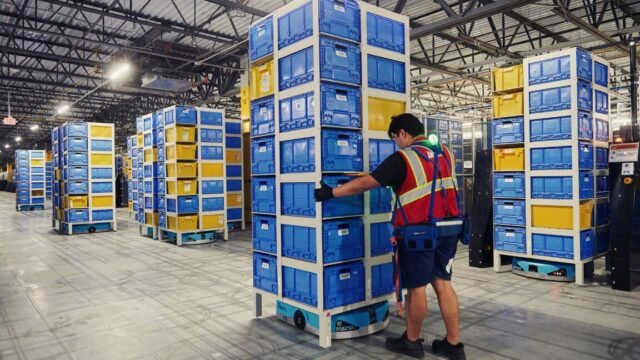
No organization in the world operates more robots than Amazon. The company already has more than 1 million robots working in warehouses around the clock to make tens of millions of same-day and one-day package deliveries happen on a daily basis—and Amazon is poised to significantly grow that robotic fleet in the coming years as it establishes new factories to churn out increasingly more capable robot workers. Despite deploying so many robots, Amazon is also the second-largest corporate employer in the world, with more than 1.5 million full-time and part-time human workers, according to its 2025 annual report. Amazon executives say that the growing robot fleet has eased the burden on its human workforce by taking on the toughest fulfillment center tasks that carry the greatest risks of physical fatigue and injury. But labor advocacy groups and independent researchers point to evidence suggesting that warehouse automation driven by AI is not all upside for the humans who work alongside robots. “For the last 100 years, most of the automation that we've seen usually happens away from workers—you're taking that high-risk task away from the worker, and you're doing so in a way that is not physically proximate,” Brian Greenwood, professor of business at George Mason University, told Ars. “The rise of collaborative robots really changes that dynamic for two reasons: one is that it is physically proximate, and two, the robot has the ability to dictate the pace of work.”Read full article Comments