
Airfare impact: Will the Middle East conflict lead to higher flight prices?
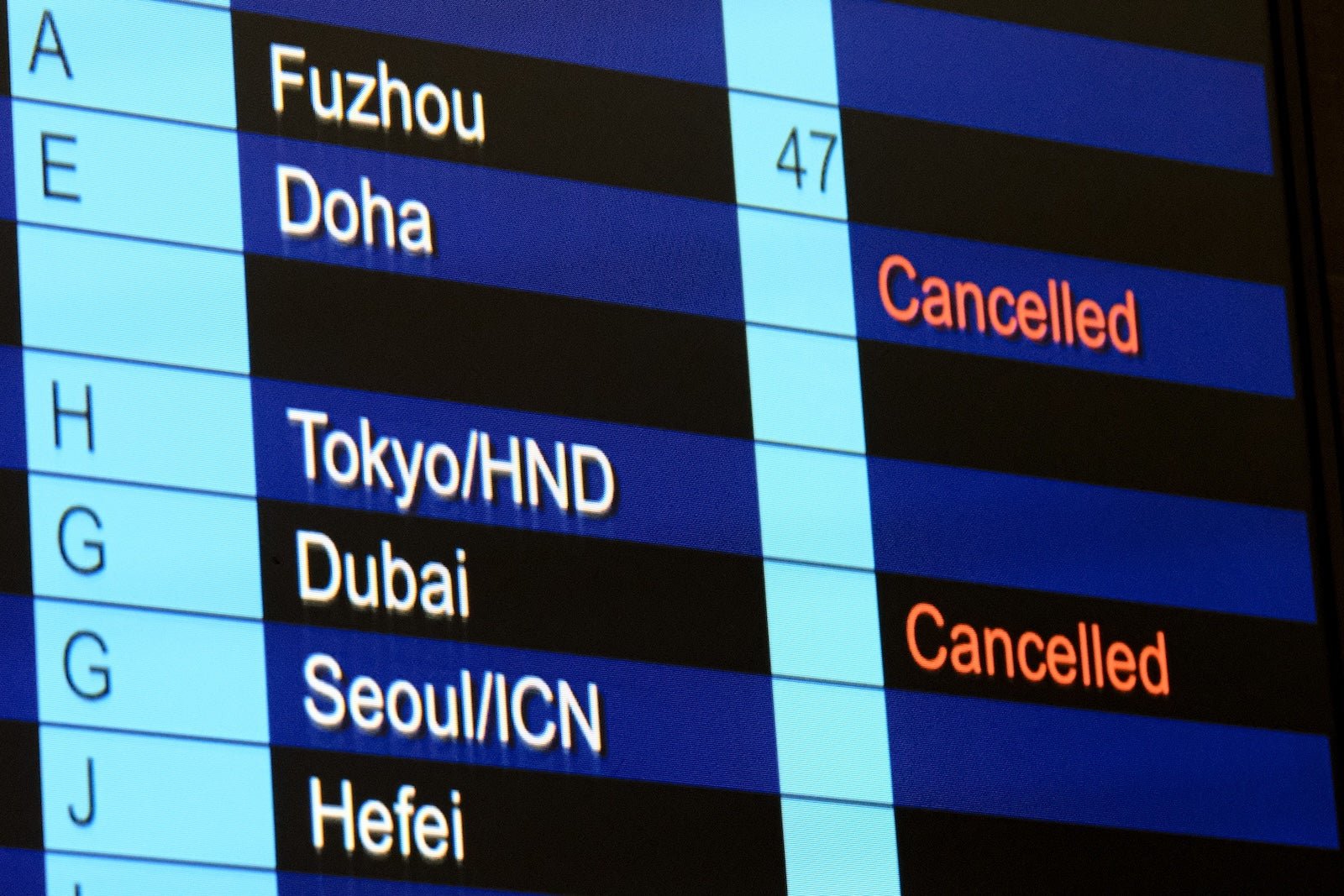
Flights across the Middle East remained largely on hold Tuesday following a weekend of massive disruptions across the Persian Gulf after the U.S. and Israel began an air assault against Iran, with Iran launching retaliatory strikes.Dubai-based airline Emirates and Abu Dhabi-based airline Etihad Airways both said they would begin limited cargo and repatriation flights but would continue to suspend all scheduled service. Meanwhile, Qatar Airways said flights to and from its Doha hub would remain “temporarily suspended.”KEITH SAWAYASU TSUJI/GETTY IMAGESAs the conflict looks likely to last beyond the initial assault (President Donald Trump on Monday said the campaign could last “four to five weeks” or longer), the broader geopolitical impact has begun to come into view.While travelers will hopefully see flight operations return to normal soon, they may also see an unwelcome surprise as the spring and summer travel seasons kick off: higher prices.Airfare changes are often tied to oil prices, which jumped more than 10% from the previous week to more than $75 per barrel as of Tuesday afternoon. More than 14 million barrels of crude oil per day are shipped through the Strait of Hormuz, which is effectively shut down amid uncertainty surrounding the fighting. A prolonged shutdown or slowdown could have significant impacts on the world’s oil supply.U.S. airline stocks plunged on Monday and Tuesday amid fears of higher fuel costs and the possibility of broader disruptions to international travel. Higher prices potentially will lead some travelers to postpone trips and cancel travel over safety concerns.A report by TD Cowen on Monday highlighted those concerns. It noted that the conflict’s impact on fuel prices was “likely to drive price action in airlines over the near term,” putting pressure on airlines’ earnings.In 2022, following the outbreak of Russia’s invasion of Ukraine, oil prices similarly jumped. At the time, airlines were able to take advantage of tight supply coming out of the COVID-19 pandemic and raise fares to cover the cost of jet fuel — especially as the “revenge travel” trend continued to surge.”Airlines typically note being able to pass through fuel price increases with a 2 to 3 month lag assuming demand remains healthy,” airline analyst Tom Fitzgerald wrote in the report.In 2022, airlines built the price of fuel into higher fares rather than stand-alone surcharges, aiming to take in at least $15 to $20 more per ticket. Fuel typically represents about a third of airlines’ total costs — the second-highest expense after labor.The degree to which oil prices climb now depends on a wide range of factors, including how long the conflict lasts and whether the Strait of Hormuz remains closed throughout it. The impact on airlines — and the degree to which they raise fares — also directly depends on how much the price of oil climbs.The good news for budget travelers is that airlines are likely to recoup much of the higher fuel cost by subtly raising fares in first class, business class and premium economy, according to Henry Harteveldt, travel industry consultant and president of Atmosphere Research Group.”That could keep prices more affordable and competitive for the regular and discounted coach fares, as well as basic economy,” Harteveldt said.Of course, that would only help offset costs for airlines with those premium cabins.Budget airlines could be hit harder and “forced to pass the higher costs along to more of their travelers,” Harteveldt added. “If oil prices climb to $100 or so per barrel, which I’ve heard some speculate about, and if they’re sustained at that level, it could be really problematic for airlines.”Ultimately, Harteveldt said, the question of impact on airfares comes down to how long the conflict lasts and how long the global oil trade is disrupted.”What we’re looking at is a temporary spike in oil prices,” he said. “The question that none of us know the answer to is how long does temporary last?”Even if prices do climb, it seems likely that customers will be willing to pay — at least, for a period, Fitzgerald of TD Cowen suggested.”Impacts on gasoline prices and broader consumer discretionary spending will also need to be monitored,” he wrote. But even so, “[t]ravel demand has proved encouragingly resilient in the face of various shocks this decade.”Editorial disclaimer: Opinions expressed here are the author’s alone, not those of any bank, credit card issuer, airline or hotel chain, and have not been reviewed, approved or otherwise endorsed by any of these entities.


